Saturday, March 31, 2018

BSA234 (Cinematography) Week 7 : Sequence Blocking

Over the easter weekend we did some camera tests on location to get our blocking and camera movement right.

The first sequence we did was Kiarne's, and it's turned into something quite ambitious. Most of his sequence will be one shot - the second shot after the opening establishing shot of the film.

The exciting part about the one shot, and the reason we needed practice doing it, is because it is quite a complicated sequence. We have to meet different set-ups throughout the take, moving the camera from person to person at times, with the shot starting by floating through a window.

Frame Sets


Kiarne decided on the frames he wanted in the one shot, creating the same effect of 5 or 6 different shots in one setup. This means that each of these individual frames can have their own meanings as they would if the shots were static. This is demonstrated especially well in the shot of the mirror, which foreshadows the double as well as establishing the mirror which will be used in one of the following shots.

Thursday, March 29, 2018

BSA234 (Cinematography) Week 7 : Storyboard Feedback

We got feedback on our storyboards this week:

My (terrible) Storyboards

Things I need to work on:

- Arrows and communicating movement

This was the biggest problem with mine, and funnily enough actually something I seriously considered going in. Which arrows mean what?

Originally I chose to have the black arrows represent camera movement and the white ones represent character, I only realize why this wouldn't work and the reason for this is two-fold:

1. Zooms and Dollies

Since I wasn't really using zooms I didn't consider them when drawing, the first frame was initially interpreted as a zoom by Patrick, while my original intention was for it to be a dolly. Having the literal black and white choices of character and camera movement ignores the fact that there are different ways the character can get closer to the subject.

2. Characters and Camera

Only in hindsight I realize that using the bigger arrows for camera makes more sense, and apparently this is closer to an industry standard (if one existed). When I looked at them with Patrick i realized it looked weird - again look for feedback before submitting. Getting someone elses opinion helps a lot, especially when attempting to communicate something.

- Perspective 

My drawing needs improvement, this is something I've started to focus on a bit more. The fourth frame was especially illegible. I need to focus more on representing the frame accurately.

- Consider Genre

This is one thing that Patrick was very adamant about - consider the genre (here being horror) and consider what would be the best way to make it more like that genre (so for us - how do you make the shot more horrific?)

The example from mine is the close-up, which to make more horrific we'd use a wide lens, to accentuate the facial features.

Horror isn't flat. This was also demonstrated with one of Izaiah's examples, where he had a hand opening a door handle. To make this less flat Patrick suggested the use of a wide lens, accentuating the form of the handle and creating an interesting point of focus.

Facial Features Accentuated

Monday, March 26, 2018

BSA234 (Cinemtaography) Week 6 : Shoulder Mount Test

We tested the shoulder mount over the weekend to see whether or not it would work for the first sequence of the film, wherein there should be a lot of following the character around. With movies like the conjuring this is usually done with a handheld effect, something which we theorized would be present with the shoulder mount, and not say the Steadicam.

BTS PHOTOS


-
This behind the scenes photo of The Conjuring displays how they filmed most of it, and like our shoulder mount the camera operator rests the camera on his shoulder while moving around the set.
-

VERY IMPORTANT FINDING
 If the talent moves and you shoot with a fast enough shutter speed you can create a photo where it looks like the person is still but looks tense:


We played around with lighting a little bit but can't do much without a lighting kit.

Saturday, March 17, 2018

BSA234 (Cinematography) Week 5 : Psychology of Shutter Angle and Perspective

This week we looked at the effect of shutter angle on the image as well as the psychological effects it can have on the viewer:

Shutter Angle is something that has bothered me for a long time now, because of the fact that I didn't really know what exactly it did to the image. I understood the theory but found myself unsure in what effect it actually had and subsequently I was incapable of using it.

That changed this week.

I am very happy that we talked more in-depth about Shutter Angle, because I feel like I've got a very good understanding of it, so much so that I can identify it accurately enough and am thinking of using it for our group horror film.

I would like to try this out myself and see what kind of quality image we can achieve with the gear we have access to, I'll probably get a camera out on Tuesday and Wednesday, my least busy days, and play around with the shutter angle then.

The examples we looked at in class demonstrated how shutter angle can help inform the point of view of the characters. We compared the John Woo film Windtalkers (2002) with Saving Private Ryan (1998):


This is the scene we looked at in class, it's a good example of taking an omniscient viewpoint for a war film. This is relevant because to achieve this the filmmakers chose not to change the shutter angle, adopting a standard 180 degree angle, leaving the movement and general style feeling normal.


Spielberg's film chose to use a faster shutter speed of 90 degrees, this gives each frame more detail and decreases motion blur. The effect this has on the audience is that of making the scene feel more jittery, visceral and jarring.

The smaller shutter can make the viewer feel uncomfortable but it is effective in emulating the emotion of war.


This sniper scene does a very good job of displaying the faster shutter, the illusion of movement is more apparent, each frame feeling like a separate image. It makes the scene feel hyper focused.

In general Saving Private Ryan takes a much more subjective viewpoint of the action:

The Omaha Beach scene demonstrates this well as we are always following the American side of the battle, even more specifically Tom Hanks. This is done by slowing the shutter speed, placing us in his shoes by showing what he sees and never showing the faces of the enemy. The shots that we get of the enemies hide them in shadow, serving mainly as a way to establish place. The filmmakers place us in the shoes of the characters by only showing us what they see.

This is opposite to Windtalkers, which in a collage-like fashion shows many different snippets of the battle, usually not relating to each-other. In the example there isn't even a main character that we are following and the two sides are hard to distinguish.

NOTES:

Shutter Speed

Watching the Omaha Beach scene is interesting because it jumps between frame rates quite a bit. Some of the scene was shot over-cranked so that slow-motion could be used for the part where Hanks' character has a moment of introspection. The notable thing about this is that not all of it is in slow mo, some footage is shown as they were shot - with the quick shutter.

This works extremely well in this scene as it emulates the way the character feels, his heart racing, but his mind unable to think.

Vignette


I like the way Spielberg leads the audiences eye, the use of this vignette is a good practice in technique as well as an example of how the film ensures that Tom Hanks is seen as the protagonist. By applying a vignette the film keeps the main character as the center of attention, a vital addition to the scene as this frame would otherwise be very confusing to the viewer.

Perspective is a very important part of film and a lot of the art of cinematography comes from using the camera and different techniques to represent a character's perspective. We've already looked at shutter angle and framing, this week we also had a look at the movement and eye-line of the camera:

BATMAN BEGINS


- Narrative and technical concerns with cutting away

We discussed in length the technique of cutting away from the main character. Nolan does this often in his films, in this scene from Batman Begins we see him using it to cut between Batman on the train, Gordon and the events on the ground and the people in the control station.

To me it has always seemed like a necessity in his films, where many different narrative strands are unfolding concurrently. It gives the audience a larger view of the proceedings and has a certain momentum in and of itself.

Patrick suggests that this could detract from the film overall though, as cutting away from our perspective character makes us take a more objective standpoint, distancing us from the character.

Wednesday, March 14, 2018

BSA202 (Audio Tech) Week 5 : SFX Replacement

This week we continued with the Robocop task, wherein we had to use provided sound effects to create a soundscape for a scene from Robocop (1987).

My final soundscape:


What I tried to achieve with this soundscape:

- More depth & variety

I wanted to create deeper sounding effects than just what we were provided. This meant layering sound bites and not repeating the same one over and over. While I liked pretty much everyone else's soundscapes, I noticed that they could feel quite empty. I think mine stands apart in this area, it feels more bass-y and textured.

Luckily we had access to a large library of sounds, there were times though that I felt limited in variety of particular sounds (like when the Robot hits Robocop) and there were times when I had something very specific in mind but which I was unable to find in our resources.

- Changing the scene with sound alone

This activity gave me the chance to experiment with a concept I have been contemplating for some time now - the idea that the soundscape can have a big affect on how we perceive the scene, being able to even change the size or amount of people in a room.

I did this to comedic effect in this scene by including applause and cheering, this creates the illusion of an audience and I think it works pretty well.

After class I had a look at the original scene to see what they did:


I was surprised by how underplayed the big robot's footsteps were, I made mine intentionally resonant because I felt that it needed to feel big. The real film gives it a more sophisticated approach, suitable to the high tech creature that the story demands it to be. Again one small change can determine how we see something as an audience. 

Mine also sounds way more worn out.

They also show a great amount of restraint, with not every single thing on screen being given it's own separate sound effect, and unlike me didn't add unneeded sound effects. It makes sense, you only want to point out the important parts of the scene.


Thursday, March 8, 2018

BSA234 (Cinematography) Week 4 : Subjective Shot Choices

In class we looked at the subconscious effect that different shot types have on the viewer.

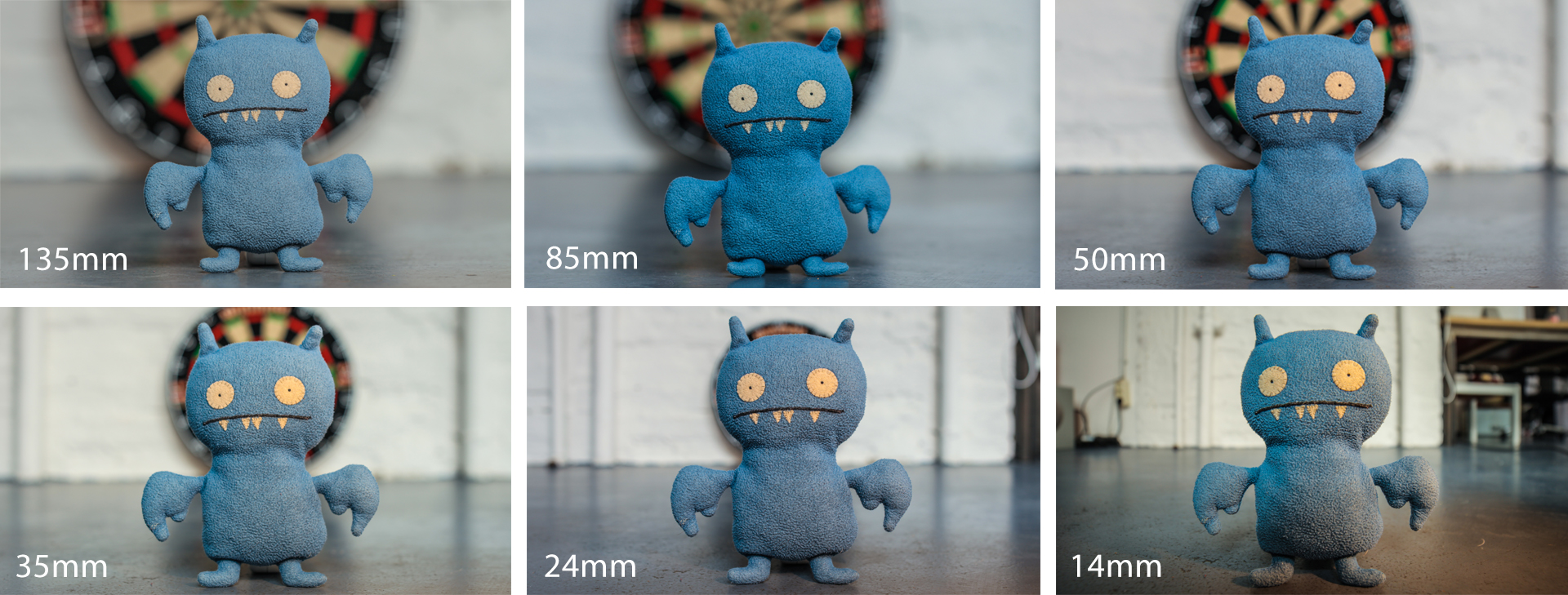
The first thing we looked at was focal length and the difference that can make.

Focal length is the distance between the point of convergence in the lens and the actual film or sensor.


The example above demonstrated the difference between lens types, and the way it shifts our perspective on the size and angle of the subject. A big change between the wide and narrow lenses is how far away the background seems,

One of the things that Patrick noted was that horror movies usually choose a wide lens for close-ups because of how it distorts the face. Traditionally close-ups use narrower lenses to keep it looking naturalistic. Romantic comedies use lenses that flatter the actors facial features instead of distorting them - can't help but imagine that a romance in wides would be quite entertaining.


These videos show how changing of lenses changes the relationship between the foreground and background as well as the way it distorts a person's facial features.


- O Tamaiti (1996)

Apparently the New Zealand film  O Taimaiti never shows the faces of the adult characters, placing the camera closer to the eye line of its protagonists - the children.

- Ida (2015)


The 2013 film Ida - which was nominated for best achievement in Cinematography at the Oscars - uses negative space on a consistent basis to represent the theme of God always watching.


Thursday, March 1, 2018

BVA203 (Research-Led Industry Practice) Week 3 : Changing Course

At the start of the week I was unable to come up with any ideas and didn't present anything in class. The only thing I was sure of was that I didn't want to pursue my original idea anymore. Originally I was confident in it, but the flaws have since been pointed out to me. Now I am unable to see it from the same point of view as I did at the start and even with help, like how my brother phrased it for me, I am incapable of understanding it completely and my passion has all but dissipated.

This was a hard week with BVA203. I struggled to understand the paper and with how I should anchor my idea conceptually. The entire idea of practically exploring doesn't make sense to me without doing so technically. How are we supposed to make something without an answer already in our heads? At least conceptually it doesn't make sense to me, if it was technical like my original idea then practice based research would work, but we're not supposed to approach it that way. Examples of how it has been successful or more clear guidelines would have been useful to me, everything just seems so vague.

Every other class has criteria that we have to meet, and they make sense within the fields that they are based - like how we film something for cinematography or write something in screenwriting. Even the other half of this class where we write essays makes way more sense to me - you do research, record your findings, break down other people's opinions, and eventually come to a conclusion yourself. At the end of the day you have a cohesive piece of writing. Here we are supposed to have theoretical examples, but also have to explore it practically. The two seem to cancel each other out, if you've already done the research then practically executing it seems like retreading someone else's steps.

The idea of "do whatever you like" is extremely enticing, but last time what I wanted to do seemed to be wrong, so I would have liked to know how to fix it. Class feedback was mostly criticisms of where I went wrong, with very few solutions being presented. The ones that were came from a completely different line of thought.

It's a paper I am having trouble understanding and I have talked a lot of people, none of who could really convince me the purpose behind why we're doing it. I don't think I have the right mindset, and trying to change the way I think is very difficult, especially just for one class.

I have come to the conclusion that my head isn't geared correctly for it, I keep going in circles trying to figure it our and even with external insight I find myself lost. It's like walking in circles except the circle keeps getting bigger. There is so much to keep in mind (like how we need theoretical and practical texts, how we shouldn't know the answer at the beginning but are expected to produce something for exhibition by the end of the paper, how we're supposed to choose a medium and methodology but aren't able to predict what the answer will be, how we need context, concept and technical all of which should be explored simultaneously, how we're supposed to answer a question with art, the list just keeps going) and yet I can't see the connections. The worst part is how undefined it is, anyone can do anything so the paper caters to everything, so we end up with no clear direction. The marking schedule is also very obtuse, everything is a blanket statement so I don't know where to put my attention and at times I don't even know what the criteria means (e.g. Practice based visual/screen media investigation of a specific question/focus developed and resolved in a focused and critical manner - I have to sit down with a dictionary to figure out what I'm supposed to do to meet this requirement).

Worst part is that most people in class seem to understand it perfectly, but I can't see how their ideas are that different to what mine was. I wanted to talk to Ruth after class, but decided against it because I was embarrassed by how little I understood of the paper even after something like five different individuals attempted to explain it to me and a whole year of already having done it.

It's like how I don't think mathematically, it's just not natural to me. I'm dumb at art, who knew. Maybe that's why I didn't study it, hmm...

I'm not the only student who's become frustrated with this half of the paper, this year and last people have been unable to completely grasp it. People think in different ways, some are naturally technical. Film is very technical and practical, animation is very inventive and industrious, Art is neither of those and I can't tell what it is or why it's important towards the completion of our bachelor. Either the students don't voice their confusion or me and a few others are the odd ones out, but it's causing me a lot of stress to think about.

Once I figure it our it will seem silly that I ever fretted over it, or how I could misunderstand. At the moment I can't see a solution in sight though.

Enough venting, the fact is that my idea was too technical and that everything will work out much better if I choose to change it, below are what I brainstormed this week, the final solution is something I'm happy with, we'll see how the feedback sesh goes next week.
_________________________________________________________________________________

OTHER PRESENTATIONS:

Here are some of the other people's presentations that stood out to me and that I thought were genuinely quite effective, I can take cues from what they are doing right in formulating a new question for myself.

Luke

Luke's idea was probably my favourite in the class. It's simple but leaves space for plenty of experimentation and creativeness. His idea was "How do you hype an audience in only a minute", using cartoon opening sequences as his inspiration. These work well to engage the audience and get them excited for the episode to follow.

I don't know how I can come up with a question similar to his, it's so concise and intriguing that it feels like catching lightning in a bottle.

Tyler

Tyler's idea is much more in line with something that I would want to do. His is "What is the director's instinct?", where he wants to explore how to be a good director and how directors know things so instantaneously on a film that they can answer almost without thinking - e.g. knowing how characters would interact even if it isn't in the script or being able to effortlessly make a decision about production design.

What I like about his idea is that it's obviously something that he thinks about quite a lot, and when he talks about it I become genuinely interested because it is real and it feels personal to him. We can have a real conversation about it because there is so little documentation on the subject and yet it is such an integral part of film-making.

I'll take inspiration from him by making my own idea something I think about a lot, something that I can have a discussion about with my peers.

I think this is something that was lacking in the third year presentations in week 1, they seemed superficial, as if the presenters didn't have confidence in their own ideas. Tyler's type of idea is real and you can talk about it passionately. It sure as hell translated in his presentation this week.

Izaiah

Izaiah's idea stood out because he is working on his own personal development and being very practical about the question he's choosing. Izaiah wants to explore how he can improve his style concerning bike videos.

What I like about his idea is that it'd going to work back into his real life, he's using the paper as a way to strengthen his own skills and answering a question that will bear fruit for him in the future. I would like to do something similar, because I think it will provide better drive for seeing it through. Knowing that the skills learned here can be used in my real life is a great motivator and it ensures I'm not wasting my time.

De la Rey

My brother's idea is to explore sequence in graphic novel, how a story is told visually and how what the audience sees informs their understanding of the story. Very akin to Eisenstein and Soviet Montage. The practical example he provided is what really stood out to me, it immediately demonstrated what he is talking about, which has a lot to do with the audience filling the gaps and even how perspective can be used.

I definitely need to provide a good practical example with my presentation, explaining the idea with visual support is a great way to make the class understand.
_________________________________________________________________________________

I have decided to stay positive and just do what I want, even if I fail I'll have learnt something. That's why my final idea is something that I actually care about and want to do, if it's too technical then that's just the way it is. Art is about personal expression, well this is me:

"How can you make a short film feel complete?" / Concept

There is a big problem that I personally have with making short films, I faced this particularly last year when I had to produce a short film script for my first year screenwriting paper. Some people think in short films, some in long form storytelling - like TV or video games - I think in features. It's very difficult for me not to end up spinning a short film idea into a feature, I think the reason why is because features are more complete and cohesive to me. A short feels so limiting and it's rare to see one where it felt like a complete piece.

This question is of personal interest and something I think of when I have time off. At the workshop Ash and James held for the first years this week James said you have to incorporate the things that keep you up at night into your films. While he was talking about story, to me this can be applied to anything, so I'm incorporating something I think of often into my work.

This also happens to be something I genuinely want an answer to, even more specifically than my perspective question, so hopefully that will help drive me to not lose faith in this one. Like Tyler and Izaiah's ideas this is as much about personal development as answering the question, it's something that can have an effect in my own life.

My question will explore this idea, and I will experiment until I find a way to make a short film feel complete to me.

The first step is to define what a complete film means to me:

DEFINE COMPLETE

- Short films serve as a showcase for the filmmakers, more so than a complete product

- Thematically consistent

- Full experience

- Everything is there for a reason

STEPS TOWARD RESEARCH

I've thought about it and decided what research I am going to do, I don't have the time this week but I can do it next:

I can look at some good short film examples, the ones that come to mind are:

- Miracle Fish (2009)

- Pitch Black Heist (2012)

I should find some bad examples too and look at why they don't work, I can't think of any off the top of my head though.

A surprising format that has achieved what I am looking for are movie trailers. I think they have found a way to tell a story in a very time efficient manner and they can still feel cohesive.

A playlist of some good trailers:

https://www.youtube.com/watch?v=saHzng8fxLs&list=PLgstXlPRW6LxB8rxO5uhC_cdZ-FOTa897

I could look at films that are structured episodically, where it is made up of a clear selection of scenes or short stories (e.g. Pulp Fiction, Trainspotting). Some of the scenes in these films - like the end of Pulp Fiction - would work just as well separate from the rest of the film.

Wednesday, February 28, 2018

BSA234 (Cinematography) Week 3: Year 1 Workshop

This week we didn't have class so that we could attend the year 1 workshop by James and Ash from SIT Pro. We had this last year and I absolutely loved it, naturally I was interested in going again. Unfortunately I couldn't attend as much of the workshop as I wanted to, but here are some notes that I took:

The first day of the workshop was introductions, covering the basics and coming up with a story idea.

Much more time efficient this year

I am impressed by how efficient the workshop is this year, last year we didn't start shooting until Wednesday (I think) and the story wasn't decided upon until Tuesday. This time around they got through all the pre-production stuff in one day, giving them three or four days of shooting, which is a notable achievement.

Good to learn same things as year later

I actually found everything that James said very helpful, which is weird because it's the same things and the same poorly spelled power point, and yet this time around I feel like I'm deriving a lot more from it. I think having a year of experience and going back to the basics shines a different light on those things and you can take more away from it. It was set up by an industry vet anyway, so knowing more about the industry now I can gain a clearer understanding of what he meant exactly when he wrote those things.

It's not bad to go back to the basics or things you've already learned, it serves as a refresher, strengthening your knowledge, and you can see new things that you would have missed before. I'd do this with the other subjects as well, I do feel like I should have a refresher, but I don't know if I have the time right now.

Even though I couldn't attend as much as I desired, the little I got was actually very good at getting my mind running. Below are a bunch of things that I took home with me:

- Make genre list and mix to generate ideas

To generate ideas we started  by listing all the genres we could think of, this helped to give us an idea of which direction to head in and define the limits of what we can work in with the resources available - a musical, for example, wouldn't have been very plausible.

Mixing the genres is a great way to generate ideas, and see what hasn't been done before. For example: A stoner movie mixed with a road trip movie mixed with a musical.

- Tell ONE LIE at the start of the film, this is the limit of the audience's suspension of disbelief.

This is a very well known script-writing rule but one that I think is worth repeating. Again I've heard it before, I'm aware of it, and yet it never properly sunk in. A lot of the time I feel like these great nuggets of knowledge fall on deaf ears simply because we're not in the right part of our life to hear it.

Since the workshop I've found myself noticing and going back to this sentence repeatedly.

- Learn the rules and practice the basics first before breaking or subverting them

This is something I've thought about a lot, I always want to find a new way to do something, but I can't if I don't know the basics first. I'm changing my mindset on this:

I want to learn the basics - the craft - first, before trying to bend the rules. We don't have to do something interesting or innovative yet, that pressure isn't necessary, we just need to focus on making the best vanilla film we can. Like Spielberg or other greats, people who I respect because they show restraint and are able to use the basics of cinema to their greatest potential, I want to be able to make an equivalent of Jaws or The Matrix before moving on to something more experimental.

Monday, February 26, 2018

BSA206 (Screen Arts) Week 3 : Motion Capture

This week we looked at motion capture and the uncanny valley.

Motion Capture is basically just a different name for rotoscoping, a classic animation technique where animators draw over live action footage. Some early examples are:

Snow White and the Seven Dwarfs (1937)

Disney was always very ambitious and strived for realism in his animated cartoons. His foray into the field of Feature Films demanded a new level of realism for the human characters:


In this documentary about the making of the film, one interviewee describes how the human characters differed from their dwarf counterparts - "One of the greatest challenges in making this film was the depiction of the human characters, the dwarfs were not that much of a problem, because they were really caricature to a great deal and they could be stretched and squashed. (but) The problem with the humans was that they couldn't, they had to be believable"

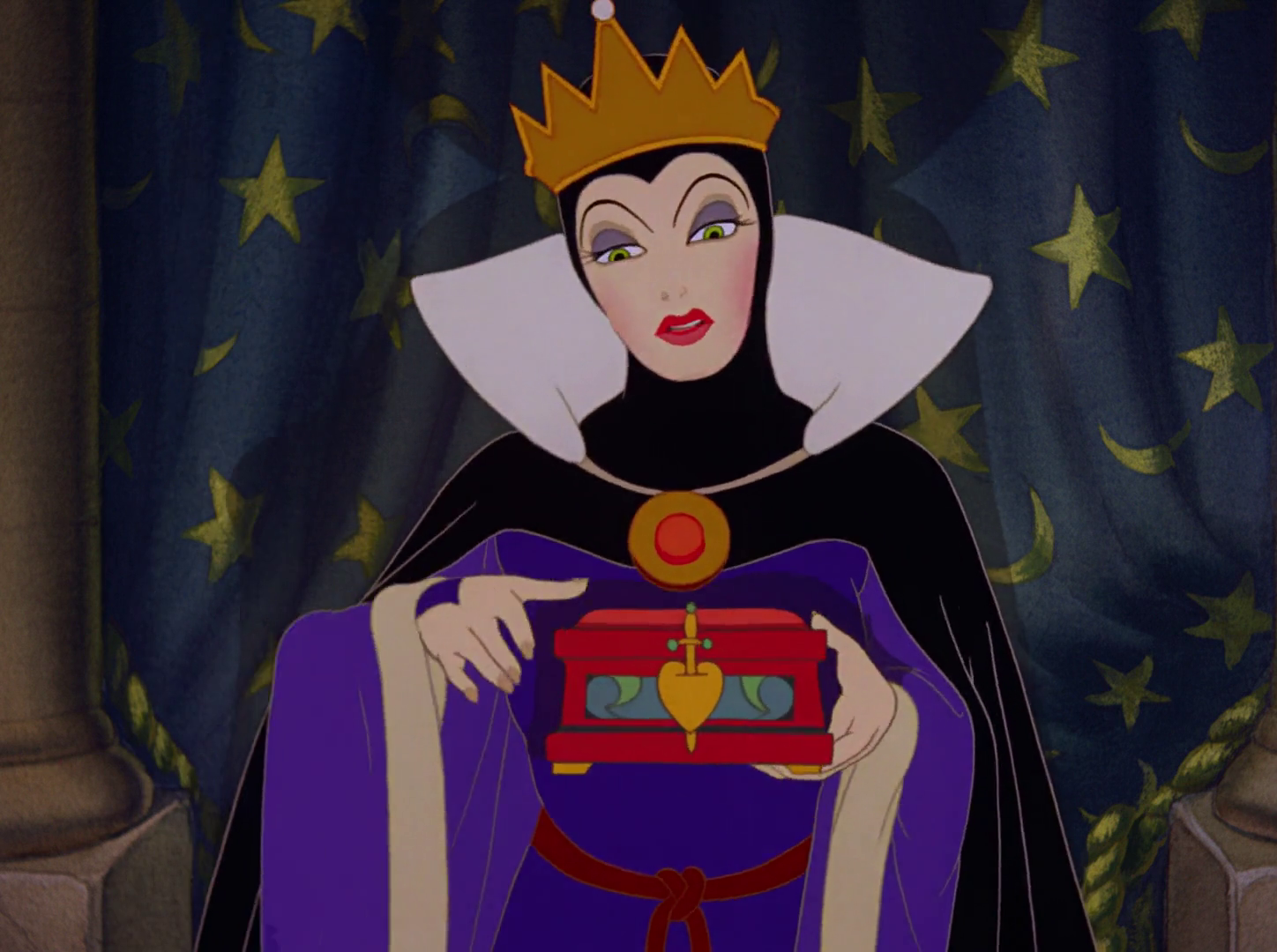
You can see how the film became less cartoony over time - the design of the queen being the example used in this documentary:

Early character designs for Snow White and the Seven Dwarfs (1937)
 
As said in the documentary:

"In the beginning, in 1934, when they started designing these characters, they looked like silly symphonies characters - a lot of them were comic"

"The early designs refined as they grew more used to this (sort of) European, illustrative look for the characters"


"The witch: the whole design is much more geared toward a realistic approach...they were trying to pull out all the stops and convince you these characters were real"

All this is simply to illustrate that Snow White demanded a different kind of approach than what Disney had attempted before. Achieving this in movement was harder than anticipated, the animators weren't used to these realistic depictions and thus rotoscoping was implemented.


(Above) The designs seen in the final film

Before the release of Snow White, Disney studios experimented with many of the techniques used in the final film through the Silly Symphony shorts. Most of which were steps toward creating more realistic depictions of people, animals and the way we see our world. The Old Mill experimented with multi-plane cameras (great little documentary on this technique: https://www.youtube.com/watch?v=YdHTlUGN1zw) and with The Goddess of Spring the studio attempted naturalistic human movement:


To get from here to the animation seen in Snow White, Disney filmed actors in live-action, performing actions that would make their way into the final animated film. The artists used this footage as a guide - basically rotoscoping:


The Alice in Wonderland example is cool because it shows what motion capture would go on to do so well - take a real performance and transform the person into something else completely, even a different animal.


Gulliver's Travels (1939)

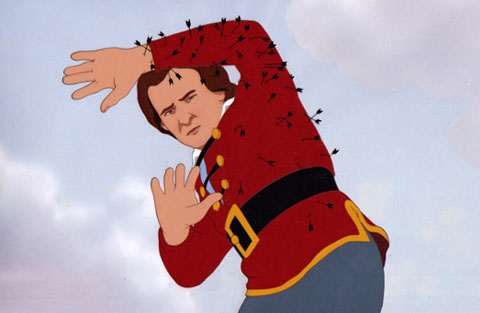
Two years after the release, and massive success of Snow White, Fleischer studios released their own feature length animated film. Again they faced the same challenge of bringing a naturalistic human being to life in animation with the title character. The Lilliputians, like the dwarfs, didn't have this issue, as they were exaggerated caricatures.

The rotoscoping here is much more obvious than in Snow White and the Seven Dwarfs, in that film it was hard to tell which character was rotoscoped and when - in Gulliver's Travels the divide is much more apparent:


Cartoon vs Rotoscope

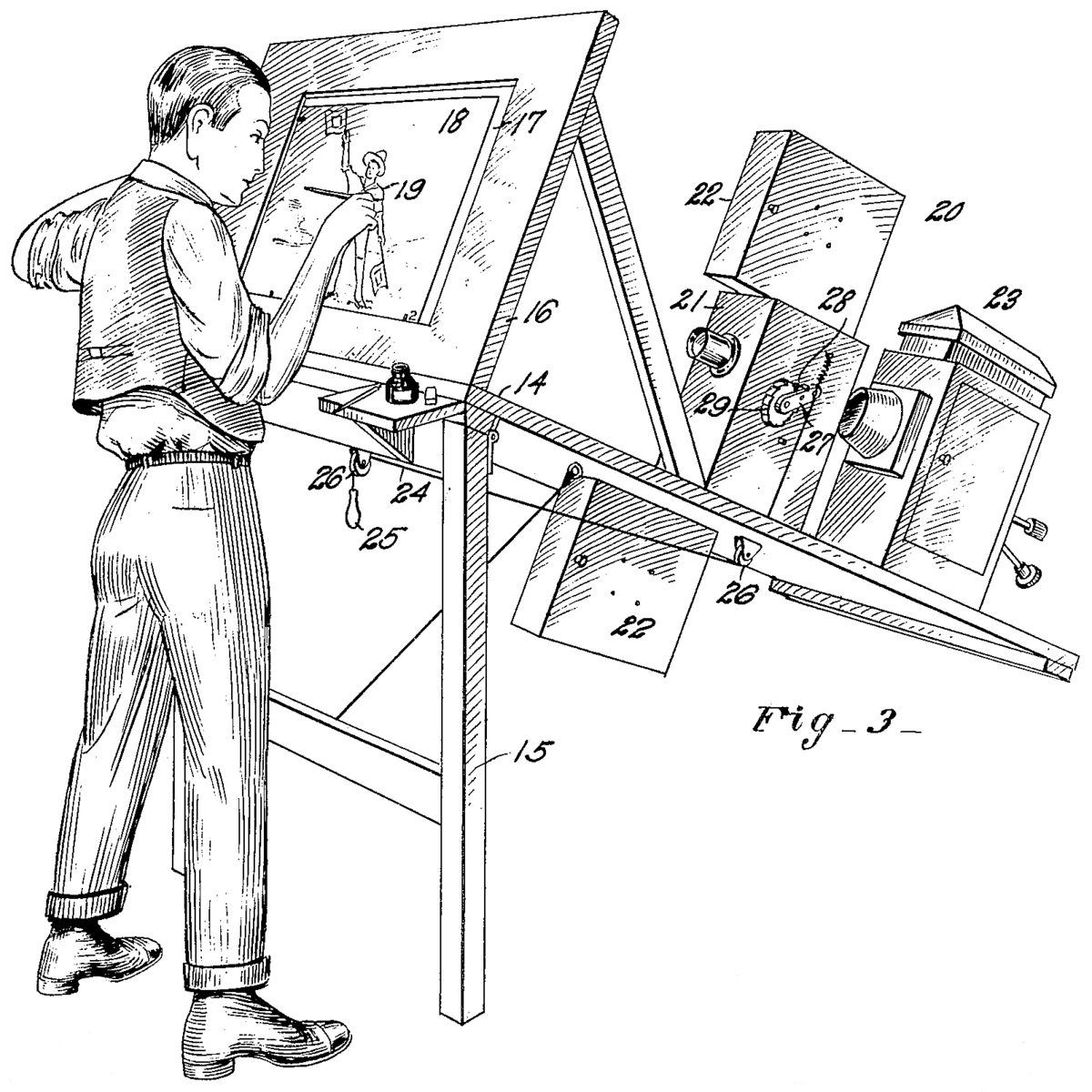
Fleischer is very important to rotoscoping, some would probably call it a crime for mentioning Disney's influence on the technique before talking about Max Fleischer. This is because Fleischer basically invented the technique. Fleischer felt that animation was too stiff and jerky, and along with his brother tested new ways which would allow them to create more fluid and naturalistic animation. This led to a device he patented as the Rotoscope in 1917.


From Wikipedia: Patent drawing for Fleischer's original rotoscope. The artist is drawing on a transparent easel, onto which the movie projector at the right is beaming an image of a single movie frame.


The first rotoscoped cartoon was Out of the Inkwell presents Koko the Clown, which was animated by Fleischer himself.

The video below explores Fleischer's innovation a bit better:


Richard Fleischer, on his father Max: "(He) Really gave cartoons the movement and flexibility we see today"

In the 90's CGI was popularized and suddenly Rotoscoping became much more prevalent, especially in live-action films. Although now it wouldn't be called rotoscoping anymore, instead it became "Motion Capture".

Motion Capture is the same as Rotoscoping in that it uses a real life model as its basis and instead of drawing over it in the traditional sense, the model is replaced with a CGI one.

One of the first examples of this in film is Star Wars: The Phantom Menace, in which George Lucas wanted a fully CGI character in the shape of Jar Jar Binks.

The actor for Jar Jar Ahmed Best said that "I was originally hired just to be the physicality of Jar Jar and then as they were looking for an actor to do the voice over stuff, I'd sent in an audition" - implying that it was originally going to be a similar situation as Darth Vader (where the man in the suit, on set, was not the same man as the voice of the character). It turns out that this became common place down the road for Motion Capture, where actors give a full performance as their characters, later to be replaced with a CGI model that retains all of their acting choices.

Although Star Wars came before, Lord of the Rings was the film that cemented Motion Capture as the next big step forward. The team at Weta created a CGI character that was so fully realized on film that people forgot he wasn't real. That character was of course Gollum.

Back then the performance by Andy Serkis was still used more as a reference, but throughout his career you can see how much the technology has progressed. Compare his performance as Gollum in Lord of the Rings to in The Hobbit. In the latter his performance was captured fully and not as many tweaks had to be made to it from the performance he originally gave to the final product.

The biggest advancement has to be the addition of facial tracking. In the time since the Lord of the Rings the ping-pong ball setup used for recording the actor's movement has evolved to include details in their facial expressions.

 This is now called "Performance Capture" - because it isn't just the movement being captured anymore, it's a full performance.

Traditional Rotoscoping is still used today, but more as a stylistic choice rather than an easier way to achieve 2D animation. Examples of this are:

Waking Life and A Scanner Darkly


Thursday, February 22, 2018

BSA234 (Cinematography) Week 2 : Depth of Field


Photo Credit : Dillon Kirton

In class we went over two main things:

EXPOSURE TRIANGLE

We went over the exposure triangle again this week because it relates directly to the exercise we did in class. We played with Depth Of Field and the interaction of different camera setting to others. 

DEPTH OF FIELD


 Editing by Sebastian

In class we did an activity where we had to use different settings on the camera until we reached a point where bokeh occurs (which happens when the aperture is the widest it can be). It's a Japanese word meaning blur or haze and creates spots of light in the background.

In class we did this by strictly following instructions on a paper - this sounds worse than I make it seem. We did it so that we could understand at which point, and on what settings, this effect occurs.   

We started close to the subject and slowly moved away, always keeping the subject in a mid shot (waist up framing). 

The further away you are, the more zoomed in, the more bokeh will occur. You can see this in the footage above, where the later shots have a lot more blur in the background - see: the NZCU sign in the footage we recorded. Increasing the distance between your subject and the background is an easy way to achieve bokeh with a higher aperture, this is why it's so commonly seen in close ups.

The shape of the blades in the lens is a deciding factor in the shape of the bokeh, it'll be more diagonal or circular depending on the shape created by the blades.

I found a good tutorial on Youtube:


I like that they demonstrate how important distance from the background is, in our exercise we didn't move the talent, here they stayed the same distance from the talent while moving away from the subject. I like the tips they give for achieving this effect:

- Get close to subject
- Get far away from background
- Keep Aperture wide open

They also mention shooting small light sources, this is the reason I think our experiment went so poorly. We didn't have very small objects and they weren't even lights.

VIMEO

Bokeh is often used in amatuer short films, usually found on Vimeo, because it gives a professional quality to the image and is easy to achieve on DSLR cameras.

Here's a video exploring how it can be used effectively, he also mentions the Vimeo craze:


These behind the scenes images show how the camera is always close to the talent to ensure that they achieve bokeh. 


Bokeh can be used in many different ways, below is an example of someone who likes to emulate this effect to an extreme for use in things like interviews (he places lights in the background knowing he's going to apply the bokeh effect):


We also got our genres this week and I was very happy to get Horror. It was the one I was hoping for, surprisingly it's completely open unlike what some other groups got - e.g. Michael Bay Action Movie. Horror is such an expansive and old genre, with a bunch of different sub-genres and visual styles.

Some visual styles present in the genre:

CRIMSON PEAK/60's Horror


EVIL DEAD, BRAINDEAD/ B-Movies


CONJURING, IT/ Modern Horror


PARANORMAL ACTIVITY, BLAIR WITCH/ Found Footage


NOSFERATU, CALIGARI/ 20's Horror


Giallo Horror 


We are currently contemplating the B-Movie look, mixing it with a psychological horror story. It's something that I'm pretty sure hasn't been done.